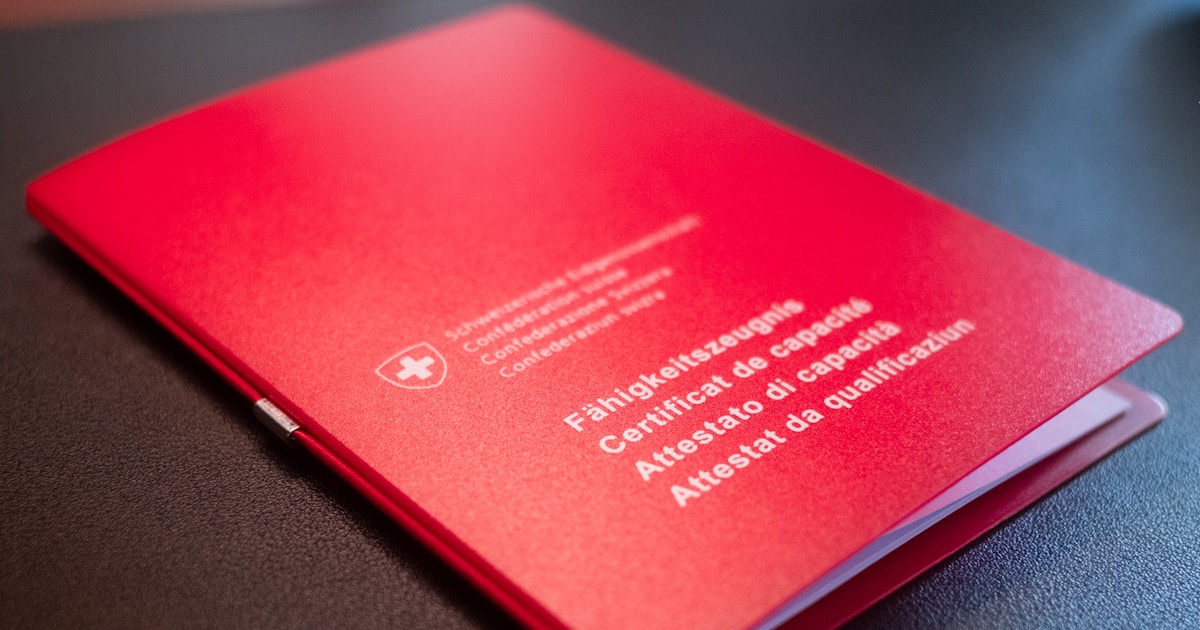
Two hundred people finished your course this term. Every one of them needs a certificate: their name, the same layout, your logo, today's date, and a unique ID. The names are already sitting in a spreadsheet. What you don't have is the three hours it takes to paste each one into a design file, export, rename the file, and repeat until your wrist gives out.
That's not a design problem. The design was finished the first time you made it. It's a production problem, and it's the exact shape of problem worth solving with data instead of a mouse.
The task isn't "make a certificate." It's "make this one 200 times."
Design tools are built around a single canvas you export once. That's the wrong unit of work here. You have one design and two hundred copies, each fed a different row of data. The creative decision happened once. Everything after it is repetition, and repetition done by hand is where the hours go and where the mistakes creep in.
Where the design-tool approach breaks
Canva's Bulk Create tops out at 300 rows and 150 columns per batch, and every term you set the whole thing up again. Below that ceiling it's workable for the occasional run. On a real cadence, or past the cap, it stops being an answer.
| Approach | Good for | Where it breaks |
|---|---|---|
| By hand, one at a time | A handful of one-offs | 200 rows becomes hours; a wrong name slips through |
| Bulk Create in a design tool | Occasional medium batches | Row cap; redo the setup every time; no way to automate it |
| Data-to-render (template plus rows) | Recurring, high-volume, on-brand | The values need to be structured first, which they usually already are |
💡 The reframe: A spreadsheet of 200 names isn't a design brief. It's an input. The question isn't how fast you can design a certificate, it's how you turn each row into the same certificate without touching a canvas.

*Photo by Carlos Muza on *Unsplash
Design once, render on every row
You build the template a single time: the frame, the seal, the typography, the exact position of every field. Then you map columns to fields. The name column fills the name slot, the completion date fills the date line, a generated code fills the ID in the footer. Each row becomes one render. Two hundred rows, two hundred files, and the layout never drifts because the template is fixed.
Deterministic is the whole point
A certificate is a credential, not a mood board. If the name sits crooked on twelve of the two hundred, the whole batch is unusable, and you won't know which twelve until someone complains. This is why the render can't be a per-call generative guess. You want the boring guarantee that the two-hundredth certificate is laid out exactly like the first, down to the pixel. Same data in, same image out, every time. That predictability isn't a limitation of this kind of tool. It's the feature you came for.
🔑 The rule: For anything that carries a name, a number, or an ID, sameness is the product. Determinism is what lets you render a thousand documents and trust all thousand without checking them one by one.
*Photo by ron dyar on *Unsplash
The brand is stored, not re-applied
One profile, every render
Your colors, your font, and your logo live in a brand profile once. The certificate pulls from it, and so does every other document you render, the same way. Swap the logo in that one place and the next batch picks it up without anyone reopening a file. Brand consistency stops being a thing you police across two hundred exports and becomes a thing the system simply holds.
The spreadsheet today, a trigger tomorrow
Right now the input is a CSV you upload. The template doesn't care where the row came from. When a course platform marks someone complete, that event already carries the fields the certificate needs: the name, the course, the date. Point it at the same template and the certificate renders itself, one per completion, with nobody opening a design tool at all. The certificate is required for the course to mean anything, which is exactly why this isn't a subscription you cancel next month. It's plumbing.
And certificates are only one shape of the same job. Invoices on payment, tickets on registration, badges on signup, receipts at checkout: each one is structured data that has to become the same on-brand document, over and over. Design the template once, wire the data in, and the recurring artifact stops being work you schedule around. That is what Lemtika is for.
Common questions
What do I actually upload?
A spreadsheet or CSV with one column per field on the certificate: name, date, course, ID. You map each column to a slot in the template once, and every row after that follows the same mapping.
How many rows can I run at once?
Well past the batch caps you hit in design tools. You get one file per row, delivered individually or bundled together, so a run of hundreds is a single action rather than a morning of exports.
What happens with an unusually long name?
The template's layout rules handle the fit, so a long name doesn't shove the design out of shape or force a manual nudge. The point of designing the template once is that it already accounts for the messy end of your data.
Do I need a developer?
Not for the spreadsheet route: upload, map, render. A developer only enters the picture when you want the automated version, where a completion event triggers the render through the API with no upload at all.
Is every certificate really identical in layout?
Yes, and that's deliberate. The render is deterministic, so the same data always produces the same pixels. It's what lets you trust a batch of five hundred without inspecting them one at a time.
If you're making the same document again and again from a list, the fix isn't a faster way to design it. It's a template you design once and a row of data for every copy.
*Cover photo by Nils Merki on *Unsplash